
Leadership
Leadership
Leadership
Organizations Are Breaking Their Designers
Most design organizations don't fail because they lack talent. Fail is generous. They fade because they're caught in a cycle that nobody outside the team themselves really talks about.

Brandon Green
Dec 1, 2025

It starts when an ambitious, new designer joins the company wanting strategic involvement. They have opinions about the product. They want to contribute beyond pixels. They push to be included in roadmap discussions, bring research to planning meetings, flag risks before they become expensive mistakes.
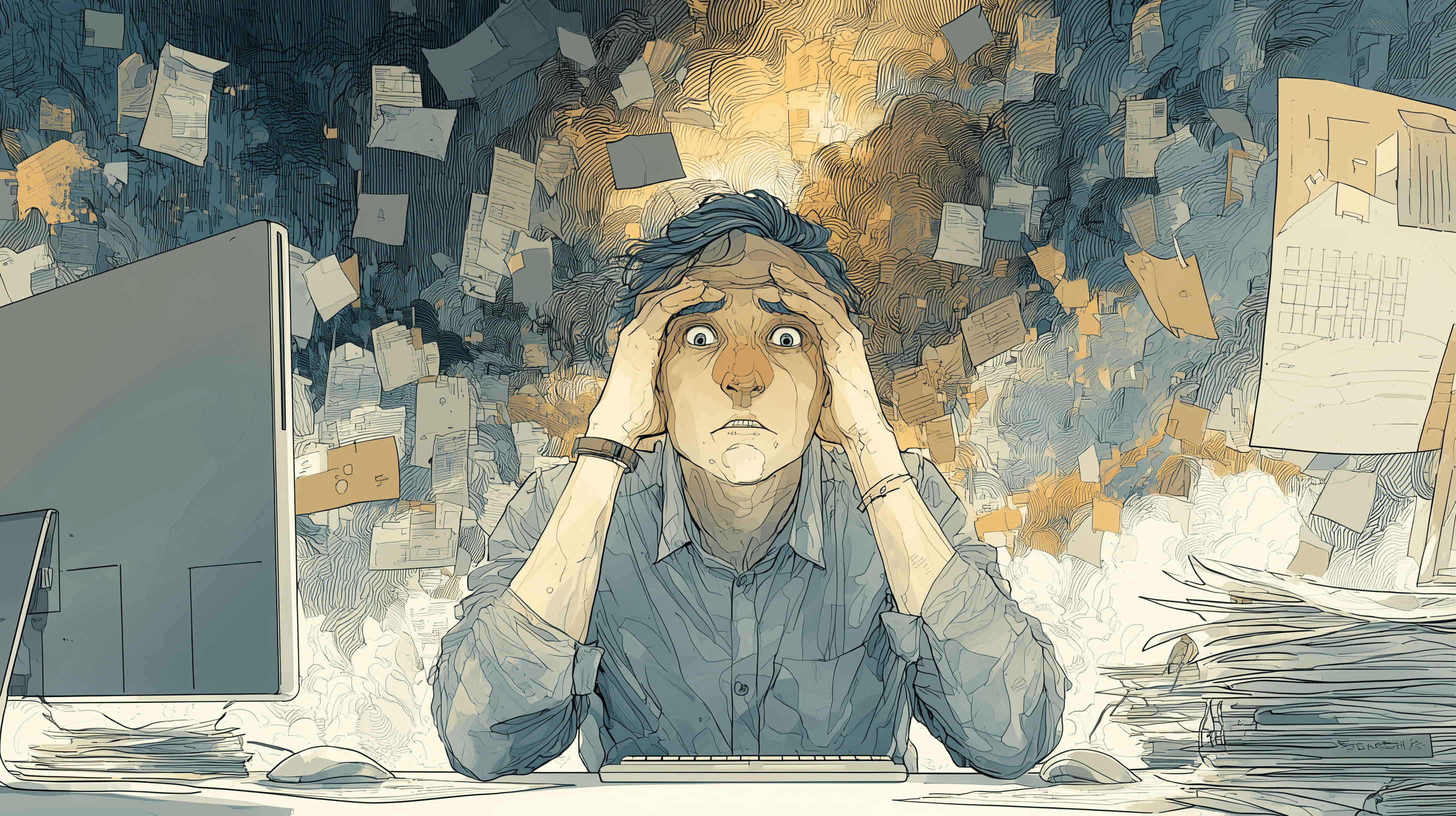
Then they hit wall after wall. The research gets "noted" and ignored. The feedback evaporates into a backlog nobody revisits. They're invited to meetings but not to decisions. After enough rejection, they stop trying. Why bleed for nothing?
Leadership watches this happen and draws the wrong conclusion that designers just want to push pixels, they're not strategic. So leadership doesn't invest in giving them a real voice. Which confirms the cycle for the next ambitious designer who arrives and hits the same walls.
The cynicism you see in design orgs isn't a character flaw. It's a rational outcome to a system that kept rejecting their input. Learned helplessness with a design title.
The fix is governance. But if you're a leader inheriting this situation, you need to understand that you're not just installing new processes. You're rebuilding trust that got burned, or may never have existed before you arrived.
Reframe: Design as a Portfolio Function
At the leadership level, design is the capacity to reduce time-to-value, increase task success, protect coherence across surfaces, and de-risk bets before they become expensive mistakes for the company.
Leadership must be able to translate design into portfolio outcomes:
Time-to-value: How fast a new customer achieves the promised outcome.
Task completion and error rate: Whether core flows actually accomplish what they claim.
Coherence: How many inconsistencies your system eliminates so the product can scale without fracturing.
Risk reduction: How much uncertainty you burned down before committing headcount and quarters.
These connect to revenue, retention, and cost to serve. If your design plan can't trace to one of these levers, it won't survive the roadmap fight.
It starts when an ambitious, new designer joins the company wanting strategic involvement. They have opinions about the product. They want to contribute beyond pixels. They push to be included in roadmap discussions, bring research to planning meetings, flag risks before they become expensive mistakes.
Then they hit wall after wall. The research gets "noted" and ignored. The feedback evaporates into a backlog nobody revisits. They're invited to meetings but not to decisions. After enough rejection, they stop trying. Why bleed for nothing?
Leadership watches this happen and draws the wrong conclusion that designers just want to push pixels, they're not strategic. So leadership doesn't invest in giving them a real voice. Which confirms the cycle for the next ambitious designer who arrives and hits the same walls.
The cynicism you see in design orgs isn't a character flaw. It's a rational outcome to a system that kept rejecting their input. Learned helplessness with a design title.
The fix is governance. But if you're a leader inheriting this situation, you need to understand that you're not just installing new processes. You're rebuilding trust that got burned, or may never have existed before you arrived.
Reframe: Design as a Portfolio Function
At the leadership level, design is the capacity to reduce time-to-value, increase task success, protect coherence across surfaces, and de-risk bets before they become expensive mistakes for the company.
Leadership must be able to translate design into portfolio outcomes:
Time-to-value: How fast a new customer achieves the promised outcome.
Task completion and error rate: Whether core flows actually accomplish what they claim.
Coherence: How many inconsistencies your system eliminates so the product can scale without fracturing.
Risk reduction: How much uncertainty you burned down before committing headcount and quarters.
These connect to revenue, retention, and cost to serve. If your design plan can't trace to one of these levers, it won't survive the roadmap fight.

Connect Strategy to OKRs
Stop "aligning with OKRs" as an afterthought. You have to connect your design portfolio to KRs that actually move the business.
A simple chain:
Strategy on one page. What you're trying to win. Where you're not playing. How you'll know. Seven bullets, max. If it needs a deck, it's not a strategy and nobody will listen.
Each strategy bullet maps to one or two KRs. No KR? Kill the bullet.
Each KR gets two to four funded bets with owners and sunset dates. No bet? It won't move forward.
Concrete example:
Company KR: Increase activation to 45% for mid-market teams
Design KR: Reduce first-time task failure from 38% to 20% on onboarding-critical flows
Bet: Replace tour overlays with progressive, in-context guidance tied to real tasks
Instrumentation: Task success and time-to-value per cohort
Monthly KR reviews are where design brings results. You report movement against the metric, the bets that caused it, the ones you killed, and what you're funding next.
Building the Roadmap Together
If the roadmap process is a suggestion box or a set of random opinions, your product portfolio will suffer. You need a forum where bets are made, re-prioritized, and killed on a predictable cadence.
Cadence: Biweekly, 50 minutes.
Involved: Triad leads for each portfolio (PM, Design, Eng). Finance joins when budgets or headcount shifts are on the table.
Decision rules that matter:
No roadmap item without a defined and measured outcome
Bets expire unless renewed with fresh input from researchers/designers
System changes come with funding and staffing, and not "volunteers"
Outputs:
Re-prioritization in public
A kill list and merge list every cycle
Debt accounted like real debt, not a sad footnote
Connect Strategy to OKRs
Stop "aligning with OKRs" as an afterthought. You have to connect your design portfolio to KRs that actually move the business.
A simple chain:
Strategy on one page. What you're trying to win. Where you're not playing. How you'll know. Seven bullets, max. If it needs a deck, it's not a strategy and nobody will listen.
Each strategy bullet maps to one or two KRs. No KR? Kill the bullet.
Each KR gets two to four funded bets with owners and sunset dates. No bet? It won't move forward.
Concrete example:
Company KR: Increase activation to 45% for mid-market teams
Design KR: Reduce first-time task failure from 38% to 20% on onboarding-critical flows
Bet: Replace tour overlays with progressive, in-context guidance tied to real tasks
Instrumentation: Task success and time-to-value per cohort
Monthly KR reviews are where design brings results. You report movement against the metric, the bets that caused it, the ones you killed, and what you're funding next.
Building the Roadmap Together
If the roadmap process is a suggestion box or a set of random opinions, your product portfolio will suffer. You need a forum where bets are made, re-prioritized, and killed on a predictable cadence.
Cadence: Biweekly, 50 minutes.
Involved: Triad leads for each portfolio (PM, Design, Eng). Finance joins when budgets or headcount shifts are on the table.
Decision rules that matter:
No roadmap item without a defined and measured outcome
Bets expire unless renewed with fresh input from researchers/designers
System changes come with funding and staffing, and not "volunteers"
Outputs:
Re-prioritization in public
A kill list and merge list every cycle
Debt accounted like real debt, not a sad footnote

Creating the Connections
Here's where rebuilding trust meets installing process. You can't just tell burned-out designers to "make their voice heard." That's victim-blaming that you try and make sound like advice. If the system rejected their input for years, telling them to try harder is insulting and ignorant.
Instead, build the connections that makes their input required. Then prove it all works.
Structural moves:
Evidence gates require a UX brief. No bet reaches the decision makers without a one-page brief covering problem framing, user evidence, proposed outcome metric, risks, and reversibility. Design input isn't a nice-to-have.
Reserve seats in the product council. Two rotating designer reps selected by peers. Mandate: surface user risks, coherence tradeoffs, and opportunity deltas.
Strategy RFCs are open by default. Any strategic change comes with a brief and a 48-72 hour comment window. Decision owners must respond to designer input before finalization.
Decision logs capture dissent. Record the decision and explicitly capture disagreement with rationale. Review dissent in the retros, this keeps the door open for course-corrects when new evidence lands.
Then "prove it" matters:
The first time a designer's input changes a decision, publicize it. The first time an evidence gate catches a risk that would have shipped, name it. The first time dissent in the log leads to a course-correct, celebrate it.
Trust isn't rebuilt by announcing new processes. It's rebuilt by continuously showing that input and actions actually make a difference.
Creating the Connections
Here's where rebuilding trust meets installing process. You can't just tell burned-out designers to "make their voice heard." That's victim-blaming that you try and make sound like advice. If the system rejected their input for years, telling them to try harder is insulting and ignorant.
Instead, build the connections that makes their input required. Then prove it all works.
Structural moves:
Evidence gates require a UX brief. No bet reaches the decision makers without a one-page brief covering problem framing, user evidence, proposed outcome metric, risks, and reversibility. Design input isn't a nice-to-have.
Reserve seats in the product council. Two rotating designer reps selected by peers. Mandate: surface user risks, coherence tradeoffs, and opportunity deltas.
Strategy RFCs are open by default. Any strategic change comes with a brief and a 48-72 hour comment window. Decision owners must respond to designer input before finalization.
Decision logs capture dissent. Record the decision and explicitly capture disagreement with rationale. Review dissent in the retros, this keeps the door open for course-corrects when new evidence lands.
Then "prove it" matters:
The first time a designer's input changes a decision, publicize it. The first time an evidence gate catches a risk that would have shipped, name it. The first time dissent in the log leads to a course-correct, celebrate it.
Trust isn't rebuilt by announcing new processes. It's rebuilt by continuously showing that input and actions actually make a difference.

The Triad as Smallest Accountable Unit
The triad is a design lead, a PM, and an engineering lead who own outcomes as one. Three roles, one outcome. They succeed or fail together.
Clear authority:
PM owns problem definition and target segment.
Design owns journey coherence, task success, and reversibility.
Engineering owns feasibility, operability, and performance.
Governance Model:
Design can block when coherence or safety thresholds are breached, with escalation to the council within 48 hours.
Engineering can block when operability risks exceed agreed error budgets.
PM can block when evidence fails to meet gates.
The Triad as Smallest Accountable Unit
The triad is a design lead, a PM, and an engineering lead who own outcomes as one. Three roles, one outcome. They succeed or fail together.
Clear authority:
PM owns problem definition and target segment.
Design owns journey coherence, task success, and reversibility.
Engineering owns feasibility, operability, and performance.
Governance Model:
Design can block when coherence or safety thresholds are breached, with escalation to the council within 48 hours.
Engineering can block when operability risks exceed agreed error budgets.
PM can block when evidence fails to meet gates.

Govern or Get Governed
Roadmaps are not supposed to be random guesses. They're choices based on data, feedback, and expertise. Without governance your choices degrade, and design becomes an aesthetic service team. With governance, design becomes a portfolio function that moves KRs, funds systems, and reduces the cost of being wrong.
If you're a design leader walking into this, understand your job is to break a cycle that predates you. You're building the connections AND rebuilding the trust that got burned. One without the other won't get you or your team to where you want to be.
Every ambitious designer who went quiet on your watch is evidence of the missing connections. Build them, prove they matter, or keep watching good people fade and blame it on culture.
Govern or Get Governed
Roadmaps are not supposed to be random guesses. They're choices based on data, feedback, and expertise. Without governance your choices degrade, and design becomes an aesthetic service team. With governance, design becomes a portfolio function that moves KRs, funds systems, and reduces the cost of being wrong.
If you're a design leader walking into this, understand your job is to break a cycle that predates you. You're building the connections AND rebuilding the trust that got burned. One without the other won't get you or your team to where you want to be.
Every ambitious designer who went quiet on your watch is evidence of the missing connections. Build them, prove they matter, or keep watching good people fade and blame it on culture.
MORE INSIGHTS

Product Problems Series
Feb 7, 2026
Empowerment is a must to allow product teams to succeed. Too many checks and balances throw off timing and outcomes.
The Authority Trap: Accountability Without The Control

Career Advice
Feb 3, 2026
Product teams are changing and not for the better. Companies want results faster and that means skipping key steps in the process.
Why Product Teams Feel Stuck